Your website was fast when you launched it. Now pages crawl during the lunchtime rush, the cart times out on payday, and your host has emailed twice about "exceeding resource limits." Nothing is broken, exactly — you've simply outgrown the shared plan you started on.
This is the moment most growing Malaysian businesses meet VPS hosting for the first time. It sits between the cheap shared plan you began with and the expensive dedicated server you don't yet need — and for a lot of stores and busy sites, it's exactly the right next step.
This guide explains what VPS hosting actually is, how it works in plain language, the clear signs you've outgrown shared hosting, and how to choose the right VPS in Malaysia without overpaying.
What Is VPS Hosting?
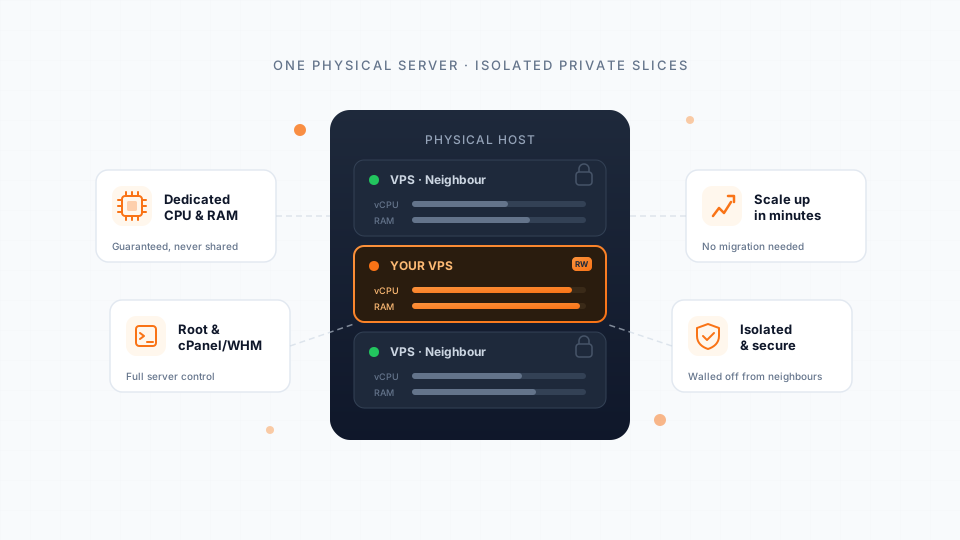
VPS hosting (Virtual Private Server) gives your website a private, guaranteed slice of a physical server — with CPU and RAM reserved just for you. A single powerful machine is divided into several independent virtual servers, and yours behaves as if it were a standalone computer.
The key word is private. On shared hosting, dozens or hundreds of websites draw from one common pool of resources. On a VPS, your slice is walled off: your CPU and memory are yours alone, and a neighbour's traffic spike can't slow you down.
A simple analogy. Think of a building:
- Shared hosting is a dormitory. It's cheap, someone else handles everything, but you share the kitchen and bathroom — and a noisy roommate affects your whole day.
- VPS hosting is your own apartment in that building. You have your own space, your own keys, and you can renovate inside. You still share the building's foundation, but what happens in your unit is yours to control.
- Dedicated hosting is owning the entire building. Total control, total cost, and you're responsible for all of it.
How VPS Hosting Works
A VPS is created through virtualization. Special software called a hypervisor splits one physical server into multiple isolated virtual machines, each with its own operating system, its own allocation of resources, and its own walls between it and the others.
Three things make this different from shared hosting:
- Dedicated resources. Your plan reserves a fixed amount of CPU cores, RAM, and storage. They don't fluctuate based on what other customers are doing. A 4GB VPS always has 4GB waiting for you.
- Isolation. Each VPS is sealed off from its neighbours. If another site on the same physical machine gets hacked or hammered with traffic, your server is unaffected. This is a real security and stability benefit over shared hosting.
- Root-level control. You get administrative ("root") access, so you can install custom software, change server settings, and configure the environment to suit your application — things shared hosting locks down for safety.
Signs You've Outgrown Shared Hosting
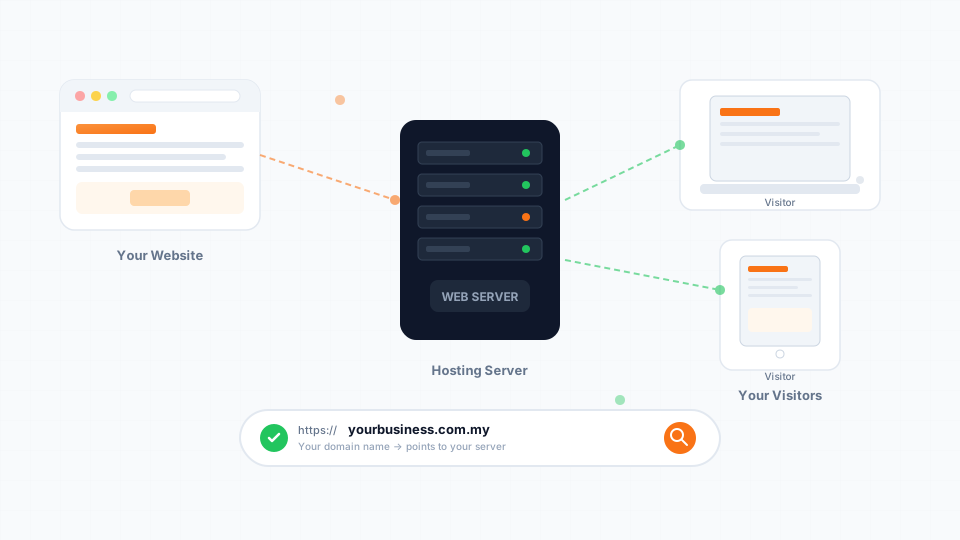
Shared hosting is the right starting point for almost every new website — it's affordable, beginner-friendly, and covers small business sites comfortably. We cover the basics in our guide to what web hosting is. But there are clear signals it's time to upgrade:
- Slow load times under traffic. Your site is quick at 3am but sluggish during business hours or campaigns. Speed directly affects sales and rankings — see our Core Web Vitals beginner's guide for why this matters.
- "Resource limit reached" warnings. Your host keeps throttling your account or emailing about CPU and memory usage. That's shared hosting telling you that you need more than it can give.
- A growing online store. E-commerce is resource-hungry — product searches, checkout, and live inventory all tax the server. Once you're processing steady daily orders, shared hosting starts to strain.
- Traffic in the tens of thousands per month. As a rough rule, sites pushing past 10,000–20,000 monthly visitors often feel shared hosting's ceiling.
- You need custom server software. A specific PHP version, a particular caching setup, or an application that shared hosting won't allow — these need the control a VPS provides.
- Downtime is costing you money. When an hour offline means lost orders or a missed enquiry, the stability of dedicated resources pays for itself.
Managed vs Unmanaged VPS
This is the single most important choice when buying a VPS, and the one beginners most often get wrong.
Unmanaged VPS
You get the raw server and nothing else. You're responsible for installing the operating system, securing it, applying updates, configuring the web server, and fixing it when something breaks. It's cheaper, but it assumes you're comfortable on the command line and have time to be your own system administrator.
- Best for: Developers and technical teams who want full control and know Linux.
Managed VPS
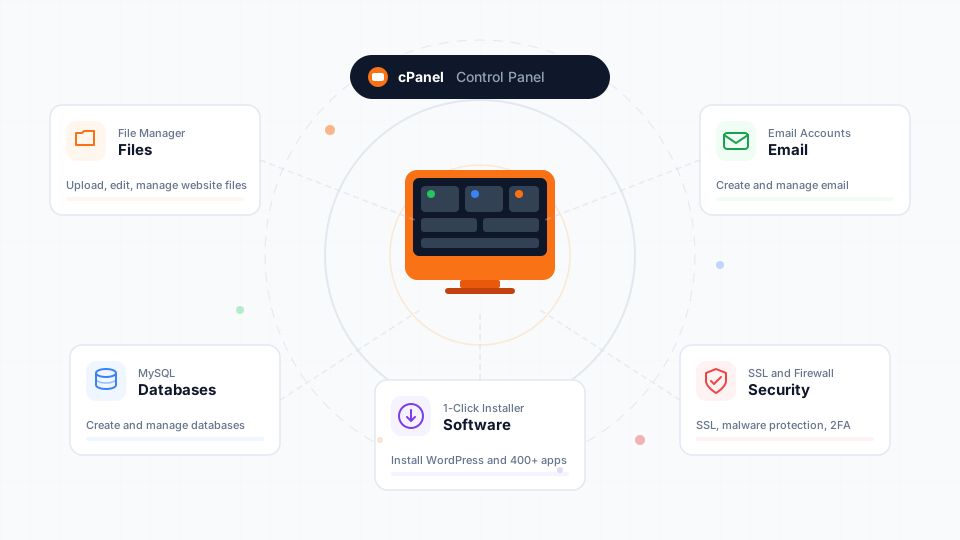
The provider handles the heavy server administration — setup, security patching, monitoring, backups, and support — usually with a familiar control panel like cPanel/WHM on top. You get the power and isolation of a VPS without needing to be a server expert.
- Best for: Business owners and most growing websites that want VPS performance without hiring a sysadmin.
VPS vs Cloud vs Dedicated Hosting
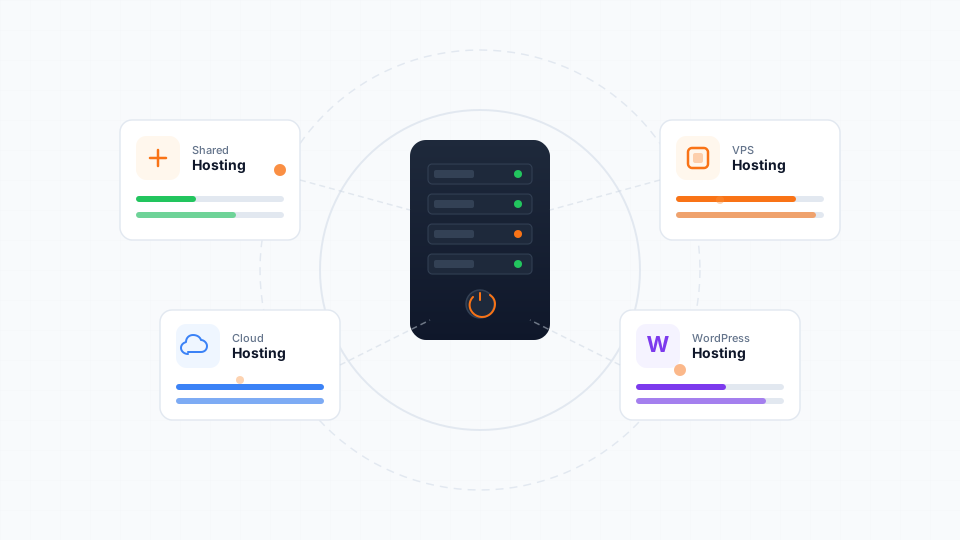
VPS is one of several upgrade paths. Here's how it compares at a glance:
| Shared | VPS | Cloud | Dedicated | |
|---|---|---|---|---|
| Resources | Shared pool | Dedicated slice | Pooled across servers | Entire machine |
| Performance | Variable | Consistent | Scalable | Maximum |
| Best for | Small sites | Growing sites & stores | Spiky, scaling traffic | Large, demanding apps |
| Control | Limited | Full (root) | Full | Full |
| Cost | Lowest | Mid-range | Pay-as-you-grow | Highest |
For a fuller side-by-side that includes pricing for each tier, see our guide on how to choose the best web hosting in Malaysia.
Why VPS Hosting Matters for Malaysian Businesses
Speed for local visitors
A VPS with guaranteed resources delivers consistent performance — and when the server sits in or near Malaysia (a Singapore data centre works well for low local latency), pages load fast for your customers in KL, Penang, and Johor. Consistent speed isn't a luxury; it's what keeps shoppers from abandoning a slow checkout.
Headroom for e-commerce
Malaysian online retail keeps climbing, and sales events like 11.11 and year-end promotions create sharp traffic surges. A VPS gives your store the dedicated CPU and memory to handle the rush without the cart freezing at the worst possible moment.
Stability and data control
Because your VPS is isolated, your site's uptime doesn't depend on the behaviour of strangers sharing your server. That isolation also helps with the Personal Data Protection Act (PDPA) — keeping customer data on infrastructure you control, in a nearby data centre, is easier to manage and account for than data scattered across a crowded shared environment.
Room to grow without re-platforming
A good VPS lets you scale up CPU, RAM, and storage as you grow — usually in minutes and without migrating to a new server. You buy what you need today and add more when the business demands it.
How to Choose VPS Hosting in Malaysia
Work through these questions before committing:
- Managed or unmanaged? Unless you have in-house Linux expertise, choose managed. The time saved is worth more than the small price difference.
- How much CPU and RAM? Match the plan to your workload. A busy WooCommerce store needs more memory than a content site. When unsure, start one tier up from the minimum and scale as needed.
- Does it include cPanel/WHM? A familiar control panel turns a technical product into something you can actually administer day to day.
- Are backups included? Daily automated backups should be standard. If they're not, factor in a backup plan — our website backup guide explains why this is non-negotiable.
- Where are the servers located? Servers in or near Malaysia mean lower latency for local visitors and your data staying close to home.
- What does the network and support look like? Look for a fast network (a 2Gbps connection is generous) and round-the-clock local support that understands Malaysian payment gateways and systems.
- Can you scale without migrating? Confirm you can add resources to your existing VPS rather than rebuilding on a new one when you grow.
What VPS Hosting Costs
VPS hosting costs more than shared hosting because you're reserving dedicated resources — but far less than a dedicated server. In Malaysia, managed VPS plans typically start around RM 200 per month and rise with the CPU, RAM, and storage you allocate.
That's a real step up from a few ringgit a month for shared hosting, so the upgrade should be driven by need, not ambition. If you're hitting resource limits, losing sales to slow load times, or running a growing store, the cost is easily justified by the performance and stability you gain. If your site is still small and quick, shared hosting remains the smarter spend — there's no prize for over-provisioning.
Getting Started
If the signs above sound like your site, the path is straightforward: choose a managed VPS, sized to your current workload, with cPanel/WHM, daily backups, and local support included. You keep the familiar control panel you already know and gain the dedicated resources your traffic now demands.
Cynet's managed VPS hosting gives you dedicated CPU and RAM, full cPanel/WHM, daily backups, and full server management on a 2Gbps network from a Singapore data centre — around ten times the power of shared hosting, with no long contracts. If you're not sure whether VPS or another tier fits best, our web hosting overview lays out every plan side by side, and you can always start on business hosting and upgrade when you outgrow it.
Wrapping Up
VPS hosting is the natural next step when your website has outgrown a shared plan but doesn't yet need a server of its own. It gives you dedicated, guaranteed resources, isolation from noisy neighbours, and the control to run your site exactly how you want — at a price that sits comfortably between the two extremes.
The decision comes down to a single question: is shared hosting holding you back? If your pages slow under traffic, your host keeps flagging resource limits, or your store is growing steadily, a managed VPS will give your business room to keep growing — without forcing you to become a server administrator to get there.